Roman urban planning relied heavily on public entertainment to project imperial power, maintain social order, and foster civic identity. Across the Roman Empire, cities featured monumental structures built specifically for performance, athletic competition, and mass spectacle. However, modern visitors and English speakers frequently conflate three distinct architectural types: the theater (theatrum), the amphitheater (amphitheatrum), and the circus (circus).
In English popular culture, the term “Colosseum” is often incorrectly used as a generic noun for any Roman amphitheater. Examining the structural designs, social functions, and historical purposes of these three building types clarifies these distinctions. Cartagena, known in antiquity as Carthago Nova, serves as an extraordinary case study on the Iberian Peninsula, as this ancient port city possessed all three entertainment venues during its Roman golden age.
The Roman Theater (Theatrum): Art, Drama, and Civic Hierarchy
The Roman theater was designed primarily for acoustic clarity and dramatic performances, including plays, pantomimes, musical recitals, and poetry readings. Derived from earlier Greek designs, the Romans altered the structure by building free-standing buildings rather than relying strictly on natural hillsides, utilizing advanced barrel vaults and concrete arches.
Key Architectural Characteristics
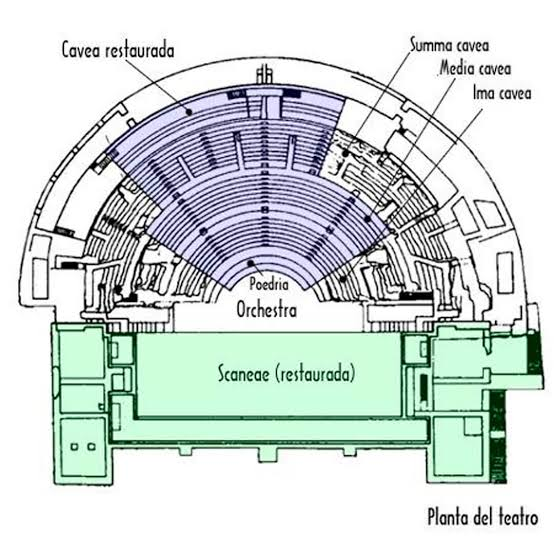
- Semicircular Shape: Unlike an amphitheater, a theater forms a precise semicircle (180º).
- Cavea: The tiered seating area, strictly divided by social class. Patricians sat near the front, while plebeians and women occupied the upper tiers.
- Orchestra: The semicircular space between the audience and the stage, reserved for VIP seating or magistrate chairs in Roman adaptations.
- Scaenae Frons: A towering, elaborately decorated architectural backdrop behind the stage, featuring multi-tiered columned porticos, statues, and decorative niches.
The Case of Cartagena: El Teatro Romano
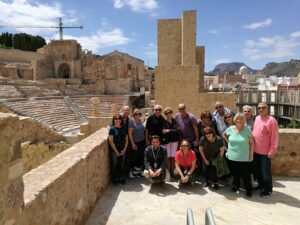
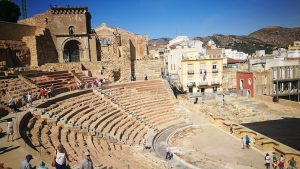
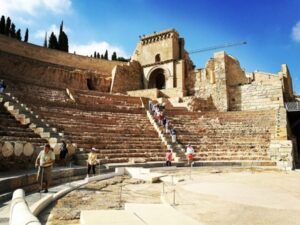
Discovered unexpectedly in 1988 beneath the ruins of the Old Cathedral, Cartagena’s Roman Theater is one of the most significant archaeological finds in Spain. Built between 5 and 1 BC during the reign of Emperor Augustus, it was dedicated to his grandsons and intended heirs, Lucius and Gaius Caesar.
The architects incorporated the natural slope of the Cerro de la Concepción hill for the cavea, allowing it to seat roughly 6,000 spectators. Today, the site features a state-of-the-art museum designed by architect Rafael Moneo, which guides visitors through subterranean passages into the excavated theater.
The Roman Amphitheater (Amphitheatrum): Gladiators and the “Colosseum”
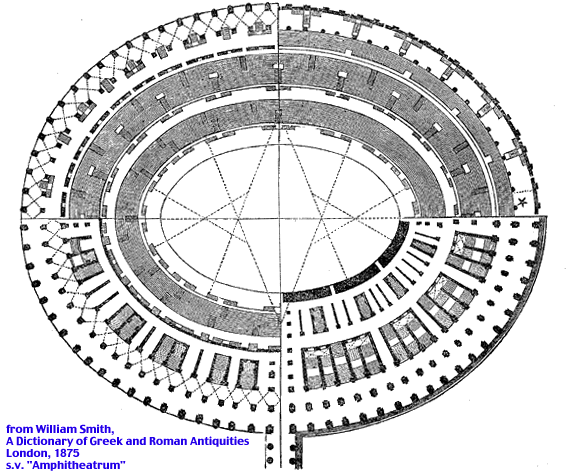
The word amphitheatrum literally translates to “double theater” or “theater on both sides.” Unlike the semicircular theater, an amphitheater is an enclosed, full oval designed to focus the audience’s attention inward toward a central arena (arena being the Latin word for sand, which absorbed spilled blood).
Structural Design and Function
- Elliptical Layout: A complete 360º oval ring of tiered seating surrounding a central floor.
- The Arena Floor: Covered in sand, often equipped with a complex subterranean system of corridors, cages, and mechanical lifts (hypogeum) beneath the floorboards.
- Events Hosted: Gladiatorial combats (munera), wild beast hunts (venationes), public executions, and re-enactments of famous battles.
Why Calling Every Amphitheater a “Colosseum” Is Incorrect
In English, casual usage often leads people to call any ancient amphitheater a “colosseum.” In proper historical and architectural terminology, the Colosseum is the specific proper name of the Flavian Amphitheatre in Rome.
The Flavian Amphitheatre acquired the nickname “Colosseum” during the Middle Ages due to its proximity to the Colossus of Nero, a gigantic bronze statue of the emperor that stood nearby. Calling an amphitheater in Spain, France, or North Africa a “colosseum” is the equivalent of calling every modern sports stadium “The Superdome.” The correct generic architectural term is always amphitheater.
The Case of Cartagena: El Anfiteatro Romano
Cartagena’s Roman Amphitheater was built during the 1st century AD outside the ancient city walls. It held gladiatorial games and public spectacles for Carthago Nova’s urban population.
In the 19th century, local authorities built a bullring (Plaza de Toros) directly on top of the amphitheater’s ruins, inadvertently encasing much of the ancient stone structure within its foundations. Modern archaeological efforts—the Proyecto Anfiteatro Romano—are currently uncovering and restoring the ancient walls beneath and around the bullring, creating a layered monument that showcases centuries of Spanish history.
The Roman Circus (Circus): Speed, Chariots, and Mass Spectacle
The Roman circus was the largest structure in any Roman city, designed specifically for high-speed chariot racing (ludi circenses). It is the Roman equivalent of the Greek hippodrome.
Key Architectural Characteristics
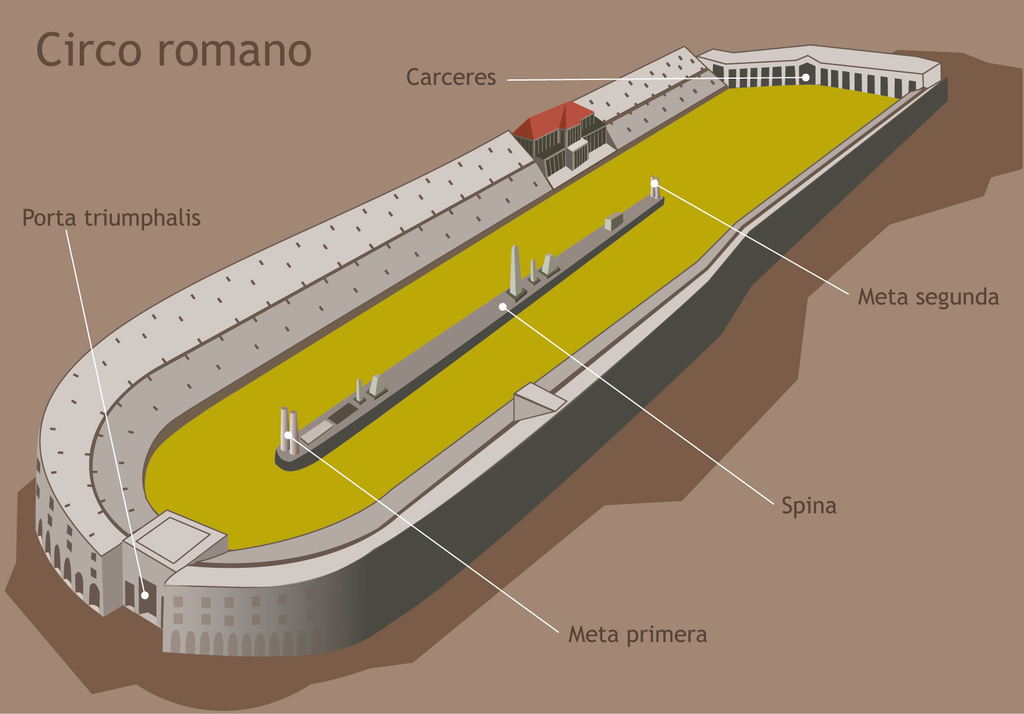
- Elongated U-Shape: A long, narrow rectangle with rounded ends, featuring a central barrier running down the middle.
- The Spina: The central dividing wall, richly decorated with obelisks, statues, trophies, and water basins.
- Metae: Turning posts situated at each end of the spina. Navigating the sharp turn around a meta at top speed was the most dangerous and thrilling part of a chariot race.
- Carceres: The starting gates from which up to twelve chariots launched simultaneously.
The Case of Cartagena: El Circo Romano
Because circuses required enormous tracks—often extending 400 to 600 meters in length—they were almost universally located outside the city walls where flat land was abundant. Cartagena’s circus was situated probably in the extramural plain near the modern Alameda de San Antón district (not excavated)
While urban expansion over the centuries has covered most of Cartagena’s circus, archaeological soundings and historical maps have confirmed its orientation and existence. Carthago Nova’s ability to construct and maintain a circus highlighted its elite economic standing within the province of Hispania Tarraconensis.
Summary of Architectural Differences
| Feature | Roman Theater (Theatrum) | Roman Amphitheater (Amphitheatrum) | Roman Circus (Circus) |
| Shape | Semicircular (180º) | Oval / Elliptical (360º) | Elongated U-Shape track |
| Focus | Raised stage (scaena) | Central arena floor | Central barrier (spina) |
| Primary Events | Plays, pantomimes, recitals | Gladiator combat, beast hunts | Chariot races, equestrian events |
| Common Misconception | Confused with amphitheaters | Miscalled “Colosseum” in English | Confused with modern circular circuses |
| Cartagena Location | Hillside of Cerro de la Concepción | Site of the old Plaza de Toros | Extramural area (Alameda de San Antón) |